

The Comeback Kids! From Churchill to Gladstone, the prime ministers who returned to lead Britain for a second time
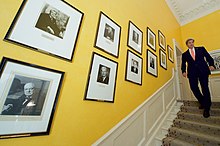
The commodity lists the records of prime ministers of the United Kingdom since 1721.
Period of service [edit]

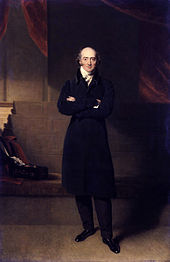
George Canning, the shortest-serving prime number minister (April–Baronial 1827) (119 days)
The prime minister with the longest single term was Sir Robert Walpole, lasting twenty years and 315 days from iii April 1721 until xi Feb 1742.[one] This is too longer than the accumulated terms of any other prime number minister.
The shortest period in office is more dislocated, depending on the criteria. The shortest ever menses was just two days, a record held by Lord Bath, from x to 12 Feb 1746, who was asked to form a government but was unable to find more than one person who would hold to serve in his chiffonier. A satirist of the time wrote: "the minister to the astonishment of all wise men never transacted i rash thing; and, what is more marvellous, left as much coin in the Treasury every bit he constitute in it." James Waldegrave, 2d Earl Waldegrave was a prime number minister for four days, from viii to 12 June 1757. However, since neither of these Earls actually formed an constructive government, there are other contenders for the record of shortest term of role among those who actually governed the country.
In November 1834, the Knuckles of Wellington declined to become Prime Minister in favour of Sir Robert Peel but formed a 'caretaker' administration for 25 days (17 Nov 1834 – nine December 1834) while Peel returned from Europe. Still, every bit a caretaker administration this might not necessarily be considered a term of function in its own right.
Therefore, of those with clear and effective terms, the prime minister with the shortest single one was Lord Rockingham, whose 2nd term lasted 96 days from 27 March 1782 until his expiry on 1 July 1782. However, combined with his get-go term (thirteen July 1765 – 30 July 1766) his total fourth dimension in office was 1 year and 113 days, which exceeds the full periods of several other prime number ministers. (The Duke of Wellington had also served every bit Prime number Minister betwixt 1828 and 1830.)
Consequently, the prime number minister with the total shortest period in role was George Canning, whose sole term lasted 119 days from 12 April 1827 until his death on viii Baronial 1827.
The prime number minister with the longest period between the start of their starting time appointment and the end of their final term was the Duke of Portland, whose first term began on 2 April 1783 and whose second and last term concluded on 4 October 1809.
Number of terms [edit]
A prime minister's "term" is traditionally regarded every bit the catamenia between their appointment and resignation, dismissal (or decease, in the case of those who dice in office), with the number of general elections taking place in the intervening catamenia making no divergence.
The only prime minister to serve four terms nether that definition was William Ewart Gladstone (3 December 1868 – 20 February 1874, 23 April 1880 – 23 June 1885, 1 Feb 1886 – 25 July 1886 and 15 August 1892 – 5 March 1894).
Terms of prime ministers and reigns of sovereigns [edit]
The role of Prime Government minister has coincided with the reigns of eleven British monarchs (including a Regency during the incapacity of George Iii from 1811 to his death in 1820), to whom the prime minister has been constitutionally head of authorities to the sovereign'south headship of state.
Until 1837 the death of a sovereign led to Parliament beingness dissolved inside six months which led to a general election. Results of such elections were:
- 1727 – Sir Robert Walpole held
- 1761 – the Duke of Newcastle held
- 1820 – Lord Liverpool held
- 1830 – the Duke of Wellington defeated, Lord Grey appointed
- 1837 – Lord Melbourne held
Served nether most sovereigns [edit]
Stanley Baldwin is the but prime government minister to have served iii sovereigns, in succession – King George Five, King Edward 8 and King George VI. Through being in role at transitions between reigns, 8 prime ministers each served under two sovereigns:
- Sir Robert Walpole – George I and George Two
- The Duke of Newcastle – George II and George III
- Lord Liverpool – George III and George Four
- The Knuckles of Wellington – George IV and William Four
- Lord Melbourne – William IV and Queen Victoria
- Lord Salisbury – Queen Victoria and Edward VII
- H. H. Asquith – Edward Seven and George V
- Sir Winston Churchill – George 6 and Elizabeth II
Number of prime number ministers serving during reign [edit]
Elizabeth Ii has had xiv prime ministers serving during her reign (since 1952), from Sir Winston Churchill to the present prime minister, Boris Johnson. This ties a record previously set past George 3, who had 14 prime ministers serving during his 59-year reign (reigned 1760–1820), beginning with the Duke of Newcastle. Yet, George III'due south terminal prime minister, Lord Liverpool, was appointed past his son (the Prince Regent) during his father'due south final incapacity to dominion. Following Johnson'due south resignation announcement in 2022, she is expected to beat this tape.
In downward numerical lodge, numbers of prime ministers in function during other reigns are:
- Victoria – ten, from Lord Melbourne to Lord Salisbury
- George II – five, from Sir Robert Walpole to the Duke of Newcastle
- George V – five, from H. H. Asquith to Stanley Baldwin
- George Four – 4, from Lord Liverpool to the Knuckles of Wellington
- William IV – 4, from the Duke of Wellington to Lord Melbourne
- Edward VII – four, from Lord Salisbury to H. H. Asquith
- George VI – 4, from Stanley Baldwin to Winston Churchill
- George I – 1 (Robert Walpole)
- Edward Eight – 1 (Stanley Baldwin)
Prime ministers born during reigns in which they held role [edit]
But seven prime ministers came to serve office nether sovereigns in whose own reigns they were born. The nowadays prime minister, Boris Johnson, is the fourth prime number minister to take been born in the reign of the present sovereign Queen Elizabeth Two.
King George III (reigned 1760–1820)
- Spencer Perceval (born 1762,[*] served 1809–12)
- Lord Liverpool (born 1770, appointed 1812)
Queen Victoria (reigned 1837–1901)
- Lord Rosebery (born 1847, served 1894–95)
Queen Elizabeth II (acceded 1952)
- Tony Blair (born 1953, served 1997–2007)
- David Cameron (born 1966, served 2010–16)
- Theresa May (built-in 1956, served 2016–2019)
- Boris Johnson (born 1964, appointed 2019-2022)
Cameron and Johnson accept the additional distinction of beingness younger than all of their monarch'south children.
* ^ Perceval was assassinated in 1812. His is the only consummate lifetime lived by a prime minister under a single sovereign.
Prime ministers who lived under most reigns [edit]
Both Robert Walpole (1676–1745) and Lord Wilmington (c. 1673–1743) lived under the reigns of the aforementioned 6 sovereigns: Charles 2, James II, William III and his joint sovereign Mary II, Queen Anne, George I and George Two.
Sir Winston Churchill (1874–1965), Clement Attlee (1883–1967), Anthony Eden (1897–1977) and Harold Macmillan (1894–1986) all lived under the vi reigns of Victoria, Edward VII, George V, Edward VIII, George VI and Elizabeth 2.
Age [edit]
Age at appointment [edit]

The youngest prime minister to be appointed was William Pitt the Younger on 19 Dec 1783 at the age of 24 years, 6 months and 21 days.
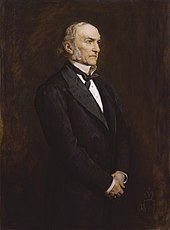
William Ewart Gladstone was appointed more than times than any other prime minister. He was also the oldest person e'er appointed (at age 82).
The oldest prime minister to exist appointed for the first time was Lord Palmerston on half dozen February 1855 at the age of seventy years, 3 months and 17 days.
The oldest prime minister to be appointed overall, and oldest to win a General Election, was William Ewart Gladstone, who was born on 29 December 1809 and appointed for the concluding fourth dimension on 15 August 1892 at the age of 82 years, 7 months and 3 days, following that year's General Ballot.
Age on leaving office [edit]
The youngest prime government minister to leave office was the Duke of Grafton, who retired in 1770, aged 34. The oldest was Gladstone, who was 84 at the time of his final retirement in 1894.
Age differences of approachable and incoming prime number ministers [edit]
Greatest historic period difference – Lord Rosebery (built-in 7 May 1847) was 37 years 129 days younger than William Ewart Gladstone (born 29 December 1809) whom he succeeded afterward the final retirement of the latter in 1894.
Smallest age divergence – George Canning (born 11 April 1770) was 67 days senior to Lord Liverpool (built-in 7 June 1770), whom he succeeded subsequently Liverpool retired in 1827. Canning and Liverpool were two of 5 pairs of immediately consecutive prime number ministers who shared a same birth year, the others existence:
- William Pitt the Younger (served 1783–1801 and 1804–06) and Lord Grenville (served 1806–07) in 1759
- Lord Aberdeen (served 1852–55) and Lord Palmerston (served 1855–58 and 1859–65) in 1784
- Harold Wilson (served 1964–70 and 1974–76) and Edward Heath (served 1970–74) in 1916
The decade of the 1730s was the about productive for births of five time to come prime ministers – Lord Rockingham (born 1730, served 1765–66 and 1782), Lord Northward (born 1732, served 1770–82), the Duke of Grafton (built-in 1735, served 1768–70), Lord Shelburne (born 1737, served 1782–83) and the Duke of Portland (1738, served 1783 and 1807–09).
Longest lived [edit]
The longest-lived prime minister was James Callaghan, Baron Callaghan of Cardiff, who was born on 27 March 1912 and died on 26 March 2005 at the age of 92 years 364 days, which was the day earlier his 93rd birthday. Prior to this the longest living prime government minister was Harold Macmillan, 1st Earl of Stockton, who was built-in on 10 February 1894 and died on 29 December 1986 (aged 92 years, 322 days).
Of the 5 old prime ministers currently alive, the oldest is John Major (built-in 29 March 1943), who is 79 years quondam. If he reaches his 93rd birthday on 29 March 2036, he will surpass Callaghan'due south record and become the longest-lived prime minister.
Shortest lived [edit]
The shortest-lived prime minister was the Knuckles of Devonshire, who was born on 8 May 1720 and died on 2 October 1764 at the age of 44 years and 147 days.
Longest lived after office [edit]
The prime minister who lived the longest after leaving role for the final time was the Duke of Grafton, who left part on 28 Jan 1770 and died on xiv March 1811, a total of 41 years and 45 days. The oldest living former prime number minister, John Major, left office on 2 May 1997. If he lives until 17 June 2038, by which point he will be 95 years and fourscore days onetime, he will surpass Grafton'due south record.
In recent years, the prime government minister who lived the longest after leaving office was Edward Heath, whose term ended on 4 March 1974; he died on 17 July 2005, 31 years and 135 days later.
Shortest lived after office [edit]
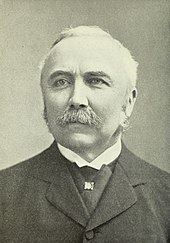
The prime minister who lived the shortest menses after leaving role was Sir Henry Campbell-Bannerman, who resigned on 3 Apr 1908 and died only 19 days afterward 22 April 1908, while still resident in 10 Downing Street.
Intervals between terms of office [edit]
The Duke of Portland was out of office between his two terms for 23 years and 101 days, from 19 December 1783 to 31 March 1807.
The shortest interval (or "fastest improvement") was achieved by Henry Pelham, who resigned on 10 February 1746 but returned to part two days later (12 February) when Lord Bathroom had been invited to form a ministry building simply failed to do then. The shortest interval where an intervening ministry building had been formed was achieved by Lord Melbourne, who was out of office after being dismissed on fourteen November 1834 but returned following the cease of successor Sir Robert Pare'southward offset ministry on xviii April 1835 – 155 days (under vi months) later.
Female person prime ministers [edit]
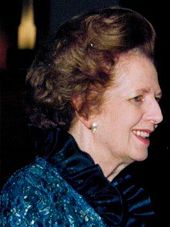
Female prime ministers have led the Great britain for a total of 14 years 219 days.
Of all the prime number ministers, only two have been female person, both of whom were Conservative prime ministers:
- Margaret Thatcher (served 1979–ninety)
- Theresa May (served 2016–19)
Birthplace [edit]
Two prime number ministers were built-in in Ireland, both in Dublin in the Kingdom of Ireland before the Act of Marriage of 1801:
- Lord Shelburne was born in Dublin in 1737.
- The Duke of Wellington was born at vi Merrion Street, Dublin in 1769.
Two further prime number ministers were born outside of the British Isles:
- Bonar Law was born in the colony of New Brunswick in what is now Canada, the first prime minister born outside the British Isles.
- Boris Johnson was built-in in New York City in the United states of America, the outset American-born prime minister and the get-go to be born exterior English language/British territory.
All other prime ministers were built-in in Dandy Great britain (44 in England and vii in Scotland). Although of Welsh origin, David Lloyd George was built-in in Chorlton-on-Medlock, Lancashire.
Facial hair [edit]
British male prime ministers when in role have been predominately clean shaven men, except for the following (as borne out by pictures):
Bearded
- Benjamin Disraeli (goatee) (served 1868 and 1874–lxxx)
- Lord Salisbury (only prime minister to vesture a full-set beard; served 1885–86, 1886–92, 1895–1902)
Moustached when in office
- Arthur Balfour (served 1902–05)
- Sir Henry Campbell-Bannerman (served 1905–08)
- David Lloyd George (served 1916–22)
- Bonar Law (served 1922–23)
- Ramsay MacDonald (served 1924 and 1929–35)
- Neville Chamberlain (served 1937–twoscore)
- Clement Attlee (served 1945–51)
- Sir Anthony Eden (served 1955–57)
- Harold Macmillan (served 1957–63)
In a pattern similar to the bald–hairy rule in Russia, betwixt 1922 and 1957 men with moustaches succeeded make clean-shaven men as Prime Minister, and vice versa.
Side whiskers (sideburns)
- George Canning (served 1827)
- Lord Grey (served 1830–34)
- Lord Melbourne (served 1834 and 1835–41)
- Lord John Russell (served 1846–52 and 1865–66)
- Lord Aberdeen (served 1852–55)
- Lord Palmerston (served 1855–58 and 1859–65)
- Lord Derby (served 1852, 1858–59 and 1866–68)
- William Ewart Gladstone (served 1868–74, 1880–85, 1886 and 1892–94)
Nationality of prime ministers [edit]
The English are a bulk inside the United Kingdom. Several prime ministers have come from the other nations of the United Kingdom.
Irish
All of the Irish prime number ministers were of Anglo-Irish gaelic background, largely descended from Protestant English settlers rather than the Gaelic Irish.
- Lord Shelburne (served 1782–83)
- George Canning (served 1827) – represented English language constituencies, except for a cursory period equally MP for Tralee in 1802–06
- The Duke of Wellington (served 1828–30)
- Lord Palmerston (served 1855–58 and 1859–65) – represented an English constituency
Scottish
- Lord Bute (served 1762–63)
- Lord Aberdeen (served 1852–55)
- William Ewart Gladstone (served 1868–74, 1880–85, 1886 and 1892–94) – born in England to Scottish parents, represented a Scottish constituency (Midlothian) for his final three terms in office
- Arthur Balfour (served 1902–05)
- Sir Henry Campbell-Bannerman (served 1905–08)
- Bonar Law (served 1922–23) – built-in in Canada to Scottish parents
- Ramsay MacDonald (served 1924 and 1929–35)
- Tony Blair (served 1997–2007) – born in Scotland, and went to school there, but afterwards lived in England
- Gordon Brown (served 2007–ten)
- David Cameron (served 2010-2016) - born in England to a Scottish family, his begetter was built-in in Aberdeenshire[two] [ circular reference ] and he is descended from the Chiefs of Clan Cameron of Lochiel.
Welsh
- David Lloyd George (served 1916–22) – born in England but Welsh-speaking, only prime number minister from a non-English-speaking groundwork
American
Boris Johnson, first American-born prime minister (born in New York City). Also first British prime minister to have been potentially eligible for the function of President of the Us: until 2016 he was a natural-built-in citizen, but had not completed the required 14 years of US residence. He has both Muslim (Turkish and Circassian) and (Russian-Lithuanian) Jewish beginnings, one ancestor having been a Rabbi and a great grandfather having been the journalist and politician Ali Kemal.
Canadian
Bonar Law, first Canadian-born prime number government minister (born in Kingston, Colony of New Brunswick, now Rexton, New Brunswick, Canada)
Anglo-Indian
Robert Jenkinson, 2nd Earl of Liverpool, had a role Indian female parent and was ane-eighth Indian.[3] [4]
Religious background of prime ministers [edit]
Britain's prime ministers have been predominately Church of England by denomination, in an role which has had input into the appointment of that Church's bishops. The beginning to agree the role from exterior the Church building of England was Lord Bute, who was a member of the Scottish Episcopal Church, while the Duke of Grafton was the beginning to catechumen away past formally condign a Unitarian, after leaving office. Prime number ministers of other denominations (when in office, unless otherwise stated) were:
Church of Scotland

- Arthur Balfour
- Sir Henry Campbell-Bannerman
- Gordon Brown
Scottish Episcopal Church
- Lord Bute
- Sir Alec Douglas-Home
Unitarian Church
- The Duke of Grafton – Church of England when in office, became member of Unitarian congregation in London in 1774.[5]
- Neville Chamberlain – was raised in a Unitarian family, but, apart from funerals, was not shown to take attended religious services during his adult life and showed no interest in organized religion.[6]
Congregationalist Church
- H. H. Asquith
- Harold Wilson
Baptist
- David Lloyd George – lost his religion every bit a youth, simply retained an appreciation of good preaching and hymn-singing.[vii] [eight]
- James Callaghan – although he became atheist by the time he reached office.[nine]
Free Church of Scotland
- Bonar Police
- Ramsay MacDonald – became a Unitarian and then joined the Ethical Union
Methodist Church
- Margaret Thatcher – until 1951, was Anglican subsequently and while in function.
Roman Catholic Church
- Tony Blair – Anglican while in office, he converted to Catholicism later leaving office in 2007.
- Boris Johnson – baptised as a Roman Catholic only became an Anglican while at school. On 29 May 2021, Boris Johnson married Carrie Symonds at Westminster Cathedral - a Roman Catholic Church - adding an boosted Catholic sacrament.[ten]
Judaism

- Benjamin Disraeli – until 1817, was Anglican subsequently and while in function.
- James Callaghan's paternal grandmother, Elizabeth Bernstein, was Jewish.[eleven]
- David Cameron is a great-great-grandson of Emile Levita, a German Jewish financier and a direct descendant of Renaissance scholar Elia Levita. Through Levita, Cameron is a descendant of the Levites, who themselves claim to exist descended from Levi, a son of Jacob and one whose name is associated with the 12 tribes of Israel. His wife, Cameron's smashing-cracking-grandmother, was a descendant of the wealthy Danish Jewish Rée family on her father's side.[12] [13]
- Boris Johnson, whose mother is the granddaughter of Elias Avery Lowe, who was a Russian Jewish immigrant to the US.[14] [fifteen]
Irreligion
- David Lloyd George – lost his religion as a youth, but retained an appreciation of adept preaching and hymn-singing.[vii] [8]
- Neville Chamberlain – described himself as "reverent agnostic," despite still holding some sympathies for the Unitarian principals he was raised in.[6]
- Clement Attlee – an doubter who described himself as "incapable of religious feeling," saying that he believed in "the ideals of Christianity" but not "the mumbo-jumbo".[16]
- James Callaghan – became an atheist while working as a trade union official.[9]
Disabled prime ministers [edit]
At least 6 prime ministers are known to have been physically disabled when in office:
- Lord Liverpool, who was incapacitated by a severe stroke on 17 February 1827,[17] forcing him to retire from office on nine April 1827.
- The Duke of Wellington, who was permanently deafened in his left ear after an operation (intended to improve hearing) in 1822.
- William Ewart Gladstone, who lost the forefinger of his left mitt in an accident with a firearm in 1842. (He likewise became partially bullheaded by 1897, post-obit his retirement from role.)
- Sir Winston Churchill, who during his 2d term became increasingly deafened (condition onset in 1949) and had a series of strokes that led to his retirement and using a wheelchair in later years.[18]
- Harold Macmillan, who was left with a slight limp and poor strength in his right hand, affecting his handwriting, subsequently several wounds in the First Earth War.[19]
- Gordon Dark-brown, who lost the sight of i eye in a school rugby accident at the age of sixteen.[20]
In add-on to the above, Theresa May has diabetes.
Others became disabled after leaving office, notably:
- The Knuckles of Newcastle, who was left lame and spoken communication-impaired after a stroke in Dec 1767.
- Lord Due north, who lost his eyesight between 1786 and 1790.
- John Russell, 1st Earl Russell used a wheelchair in afterwards life; his grandson Bertrand Russell recalled him as "a kindly old human being in a wheelchair."[21]
- Lord Rosebery, whose motility, hearing and eyesight were increasingly impaired between a stroke in 1918 and his decease in 1929.
- H. H. Asquith, who became a wheelchair user by his last year (1928) post-obit a stroke.
- Stanley Baldwin, 1st Earl Baldwin of Bewdley, who became deaf by October 1947, when he had to enquire if a crowd cheering were booing him.[22]
Harold Wilson is believed to have been aware he had early-onset Alzheimer's disease when he resigned role in 1976, though he continued to serve every bit an MP until 1983.[23]
Prior to taking office, and while serving as an MP, Alec Douglas-Dwelling house was immobilised following an operation to treat spinal tuberculosis from 1940 to 1943.
General elections [edit]
Most prime ministers in office between general elections [edit]
There have been two intervals betwixt general elections, both in the 18th century, when on both occasions five successive prime ministers were in role.
- Between the general elections of 1761 and 1768: the Knuckles of Newcastle (resigned 26 May 1762), Lord Bute (resigned eight April 1763), George Grenville (resigned 10 July 1765), Lord Rockingham (resigned 30 July 1766) and Lord Chatham (until dissolution of the parliament).
- In the shorter interval betwixt the general elections of 1780 and 1784: Lord North (resigned 27 March 1782), Lord Rockingham (2d ministry, died in office 1 July 1782), Lord Shelburne (resigned 26 March 1783), the Knuckles of Portland (resigned eighteen December 1783) and William Pitt the Younger (until dissolution of the parliament).
In modern times, since members of the Firm of Lords ceased to hold prime ministerial office (after 1902), there were three prime number ministers in part between the general elections of 1935 and 1945: Stanley Baldwin (retired 28 May 1937), Neville Chamberlain (resigned ten May, and later on died 1940) and Winston Churchill (until dissolution of the parliament).
Most general elections contested every bit party leader [edit]
The most general elections contested by an individual is vi. H. H. Asquith contested the January 1910, December 1910, 1918, 1922, 1923 and the 1924 full general elections.
The almost general elections lost past an individual is v. Charles James Trick was unsuccessful subsequently contesting the 1784, 1790, 1796, 1801 co-option and 1802 general elections, and subsequently never became Prime Minister. The most general elections won by an private is four. Robert Walpole, Lord Liverpool, William Ewart Gladstone and Harold Wilson each won four general elections.
Age at losing a general election [edit]
The youngest person to exist on the losing side at a general ballot was Charles James Fox, who led his Whig Party to defeat in the 1784 full general election when aged 35. The youngest prime number minister to be on the losing side at a general ballot was Lord Rosebery, who, having resigned his ministry in May 1895, led his Liberal Political party to defeat in the general election the following month when aged 48. Since peers ceased to hold this office (1902), the youngest losing prime government minister was John Major, at 54 years and 33 days when the Conservative Party lost the 1997 general election.
William Ewart Gladstone, was the oldest, at 76 years, when his party lost the 1886 full general election, although he returned to office in 1892. The oldest prime number minister to exist defeated without returning to office was Benjamin Disraeli, 1st Earl of Beaconsfield, who was 75 when the Conservative Party lost the 1880 general election. Aged 70 years, 200 days, Jeremy Corbyn is the oldest person to be on the losing side of a general election without ever becoming prime minister when the Labour Party lost the 2019 full general election.
Historic period at winning a full general election [edit]
The youngest prime minister to be on the winning side at a general election was William Pitt the Younger, who led his Tory Party to victory in the 1784 general election when aged 25. In contempo years, the youngest prime government minister to exist on the winning side at a general election was David Cameron, who was 43 years and 209 days former when he led his Conservative Party to victory in the 2010 general election.
William Ewart Gladstone, was the oldest. He was 82 years of age when he returned to office later his Liberal Political party were successful in the 1892 general ballot. The oldest prime number government minister to be victorious at a general ballot for the first fourth dimension was Lord Palmerston, who was 72 years of age when his Whig Party won the 1857 general election.
Prime ministers in office without a general ballot [edit]

Fourteen prime number ministers never fought a full general election while they held office (or to gain office), usually by serving terms sandwiched between the victor of one election and the prime minister who faced the adjacent. Chronologically they were:
- Lord Wilmington
- The Duke of Devonshire
- Lord Bute
- George Grenville
- The Duke of Grafton
- Lord Rockingham (served both his terms election-less)
- Lord Shelburne
- Spencer Perceval
- George Canning
- Lord Goderich
- Lord Aberdeen
- Lord Rosebery
- Arthur Balfour[24]
- Neville Chamberlain
Prime number ministers who served from (or later entered) the Firm of Lords [edit]
John Russell was unique in serving one entire term at Downing Street as Commons MP, when known as Lord John Russell (as younger son of a Duke of Bedford) in 1846–52, and his second and final entirely as a member of the Lords as the 1st Earl Russell in 1865–66, having been raised to the peerage betwixt terms in 1861.
Without counting Lord Russell, xviii prime ministers served their entire terms from the House of Lords where they were already members, chronologically:
- Lord Wilmington
- The Duke of Newcastle[*]
- The Duke of Devonshire
- Lord Bute[*]
- Lord Rockingham[*]
- The Duke of Grafton
- Lord Shelburne (later on Lord Lansdowne)
- Duke of Portland
- Lord Grenville
- Lord Liverpool
- Lord Goderich (later Lord Ripon)
- The Duke of Wellington
- Lord Grey
- Lord Melbourne
- Lord Derby
- Lord Aberdeen[*]
- Lord Salisbury
- Lord Rosebery[*]
* ^ These 5 prime ministers never served in the House of Commons during their political careers.
Three prime ministers were elevated from the Commons to the House of Lords during their terms through being raised to the peerage:
- Sir Robert Walpole, made the 1st Earl of Orford five days before formally resigning in 1742.
- William Pitt the Elder, made the 1st Earl of Chatham v days after taking part in 1766.
- Benjamin Disraeli, fabricated the 1st Earl of Beaconsfield in 1876, two years after taking his 2d term of role in 1874.
Lord Due north succeeded to his begetter's peerage as the second Earl of Guilford in 1790 after existence in role.
Sir Alec Douglas-Home disclaimed his hereditary peerage as the 14th Earl of Domicile 4 days subsequently coming to function in 1963 (under the Peerage Human activity of that year), giving upwards his seat in the Lords and subsequently saturday in the Commons after succeeding in a past-election, pending which for 20 days he held office from neither Business firm. He returned to the Lords when made life peer every bit Businesswoman Home of the Hirsel in 1974.
Xi prime ministers have served their entire terms equally Members of the Firm of Commons but were elevated to the House of Lords afterwards by existence created peers:
- Henry Addington became the 1st Viscount Sidmouth in 1805
- Arthur Balfour became the 1st Earl of Balfour in 1922
- H. H. Asquith became the 1st Earl of Oxford and Asquith in 1925
- Stanley Baldwin became the 1st Earl Baldwin of Bewdley in 1937
- David Lloyd-George became the 1st Earl Lloyd-George of Dwyfor in 1945 (22 years later being Prime Minister – although he did non live to take his seat in the Lords)
- Clement Attlee became the 1st Earl Attlee in 1955
- Sir Anthony Eden became the 1st Earl of Avon in 1961
- Harold Wilson became Businesswoman Wilson of Rievaulx in 1983 (life peer)
- Harold Macmillan became the 1st Earl of Stockton in 1984
- James Callaghan became Baron Callaghan of Cardiff in 1987 (life peer)
- Margaret Thatcher became Baroness Thatcher in 1992 (life peer)
In dissimilarity 17 prime ministers preceding the current (Boris Johnson) have never become members of the House of Lords, including his five firsthand predecessors. Henry Pelham (served 1743 to his death in 1754) was the first to be a lifelong 'Commoner' but the convention of prime ministers leading from the House of Commons merely became established in the 20th century.
Holders of Irish peerages (with the exception of 28 Irish representative peers allowed after 1801, who were elected from among their peers) legally did not sit in the House of Lords in the Parliaments of Great Britain and the United kingdom of great britain and northern ireland, simply were immune to sit in the House of Commons. Lord Palmerston was the only Irish gaelic peer to serve as Prime number Minister, thus leading from the House of Commons.
Service in House of Eatables [edit]
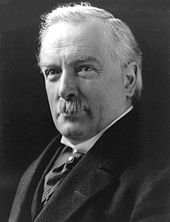
The shortest period between inbound Parliament and beingness appointed Prime number Minister was achieved past William Pitt the Younger who became Prime number Minister 2 years later on first becoming an MP. The longest menstruum of service equally an MP before becoming Prime Government minister was 47 years for Lord Palmerston.
The oldest debut of a future prime number minister as MP was past Neville Chamberlain who was elected, anile 49 years 261 days, at general election in 1918.[25]
The youngest at first election was Lord Euston (later the Duke of Grafton), who was elected at by ballot on 10 December 1756 anile 21 years and 73 days. He also had the shortest period every bit an MP enjoyed by a prime number minister, nearly v months, representing two successive seats (the first of which he only held for eleven days earlier being elected for his 2nd) until going to the House of Lords when he succeeded his male parent as the 3rd Duke of Grafton on 6 May 1757, 11 years before his term of function began.
The longest service as MP was enjoyed by Sir Winston Churchill, who saturday for a total of 63 years and 360 days, for five successive seats, between 1 October 1900 and retiring on 25 September 1964, excluding ii intervals out of parliament (in 1908 and 1922–24), retiring as Father of the House. He was in the Commons throughout both his terms as Prime Government minister, and his service covered the terms of 11 other prime number ministers, from Lord Salisbury (2nd ministry) to Sir Alec Douglas-Domicile, merely did not serve under Bonar Police who was in office when Churchill was briefly out of parliament.
David Lloyd George had the longest unbroken career as an MP, for one seat, Carnarvon Boroughs, from a by-election on 10 April 1890 until his death (having received a peerage on 1 Jan 1945 but not been able to take his seat in the Lords) on 26 March 1945 – a period of 54 years and 350 days. From 1929 he had been Father of the House. It also covered the successive terms of xi other prime ministers, from Lord Salisbury (beginning ministry building) to Winston Churchill (outset ministry building).
Of intervals between service in the Commons, Sir Alec Douglas-Domicile had the longest between automatically vacating his seat at Lanark on 11 July 1951 by succeeding his male parent and going to the Firm of Lords as the 14th Earl of Abode, and gaining his next seat at Kinross and Western Perthshire in a by-election on vii November 1963 – a total of 12 years 123 days – later on becoming Prime Government minister and disclaiming his hereditary peerage. He had a previous interval out of the Commons between defeat in the 1945 General Ballot and returning in that of 1950 more four years afterwards.
Of parliamentary constituencies that take been represented, none accept been represented by more than than one serving prime minister. Four future prime ministers sabbatum for Newport, Isle of Wight (constituency abolished 1832): Lord Palmerston and Sir Arthur Wellesley (later the Duke of Wellington) in 1807–09, George Canning in 1826–27 and William Lamb, subsequently Lord Melbourne in April–May 1827.
It is rare for veteran prime number ministers sitting in the Commons to lose seats through electoral defeat at subsequent general elections. Those who have are:
- Arthur Balfour (Manchester East) in 1906.
- H. H. Asquith (East Fife) in 1918.
- Ramsay MacDonald (Seaham) in 1935.
Prime ministers who were Begetter of the House [edit]
Five prime ministers through longest unbroken service became Father of the Firm. Sir Henry Campbell-Bannerman was the first prime minister to attain this status, uniquely while in office, in 1907. He was still serving every bit an MP when he died before long after retiring as Prime Government minister. The others listed below became Father later the terminate of their terms. James Callaghan only 4 years and 36 days after stop of office, while at the other extreme Edward Heath became Male parent 18 years after the end of his.
| Name | Entered House | Prime Minister | Became Father | Left House | Political party | Constituency | |
|---|---|---|---|---|---|---|---|
| Sir Henry Campbell-Bannerman | 1868 | 1905–1908 | 1907 | 1908 (died) | Liberal | Stirling Burghs | |
| David Lloyd George | 1890 | 1916–1922 | 1929 | 1945 | Liberal | Caernarvon Boroughs | |
| Sir Winston Churchill | 1900 |
| 1959 | 1964 | Conservative |
| |
| James Callaghan | 1945 | 1976–1979 | 1983 | 1987 | Labour | Cardiff South and Penarth | |
| Sir Edward Heath | 1950 | 1970–1974 | 1992 | 2001 | Conservative | Old Bexley and Sidcup | |
Didactics [edit]

John Major is the most recent prime minister not to exist educated at a university
School with most alumni prime ministers – Eton College – 20 (chronologically Sir Robert Walpole to Boris Johnson). Harrow Schoolhouse has educated 7 prime ministers, most recently Winston Churchill.
University with most alumni prime ministers – Oxford University – 28 (Lord Wilmington to Boris Johnson). Its rival Cambridge Academy has educated 14 prime number ministers, most recently Stanley Baldwin.
University college with near alumni prime ministers – Christ Church, Oxford – xiii (George Grenville to Sir Alec Douglas-Home)
Vocational institution with near prime ministers as students – The Inns of Courtroom – 11 (Lord Wilmington to Tony Blair). Of these, eight passed through Lincoln'south Inn (William Pitt the Younger to Tony Blair).
The first prime minister never to have been a university graduate was the Duke of Devonshire (served 1756–57); the most recent is John Major (served 1990–97).
Armed forces veterans [edit]

The earliest prime minister to be an war machine veteran was Henry Pelham (1743–54), who had served as a volunteer soldier in James Dormer'due south Regiment of Dragoons during the Jacobite rising of 1715 and fought at the Boxing of Preston that year against the Jacobite forces.
The nearly recent prime minister to be an armed forces veteran was James Callaghan (1976–79), who served in the Royal Navy in the Second World State of war, from 1942 to 1945, seeing activity with the Eastward Indies Armada and reaching the rank of Lieutenant. He was the only future prime government minister to serve in the navy rather than the army.
In dissimilarity to many nations, Britain has had only two prime ministers who have been war machine generals: Lord Shelburne (1782–83), who was promoted from Lieutenant-General to total General in the British Army in the latter year, and the Knuckles of Wellington, who achieved the supreme rank of Field Marshal in 1813. He was Prime number Government minister twice, in 1828–30 and 1834, in the interval between his ii terms equally Commander-in-Chief of the Forces. During his military career he took part in some 60 battles, seeing more wartime gainsay than any other future prime minister.
No future prime number ministers have notwithstanding served in the flying services, although Neville Chamberlain (1937–twoscore), and Sir Winston Churchill (1940–45 and 1951–55), were honorary Air Commodores in the Auxiliary Air Forcefulness during their respective terms of office.
Agile service veterans [edit]
Jacobite Rising (1715)
- Henry Pelham – Dormer's Regiment – fought Boxing of Preston
Jacobite Rising (1745)
- Lord Rockingham – Colonel of volunteers raised confronting invasion from Scotland
Vii Years' War
- Lord Shelburne, Colonel, 20th Foot – Canada, France, Federal republic of germany
French Revolutionary and Napoleonic Wars
- The Duke of Wellington, Field Marshal, Ground forces – Flanders, India, Peninsular War and Waterloo Campaign
In addition, the following served in abode based militia, volunteer or yeomanry units raised during the same wars only were not deployed away:
- William Pitt the Younger, Colonel of volunteers (was serving when died in function 1806)
- Lord Grenville, Major of yeomanry, Lieutenant-Colonel of volunteers
- Henry Addington, Captain of volunteers
- Spencer Perceval, Volunteer, London and Westminster Low-cal Horse
- Lord Liverpool, Colonel of fencible cavalry, later of militia
- Lord Goderich, Major of yeomanry
- Robert Peel, Helm of militia
- Lord Melbourne, Major of volunteer infantry
- Lord Palmerston, Captain of volunteers, Lieutenant-Colonel of militia
- Lord Russell, Helm of militia
Mahdist War
- Winston Churchill, Lieutenant, 4th Queen's Own Hussars, attached 21st Lancers
Second Boer War
- Winston Churchill, Lieutenant, South African Lite Horse and war correspondent (prisoner of war)
World War I
- Winston Churchill, Major, Grenadier Guards, later Lieutenant-Colonel, Majestic Scots Fusiliers – Western Front
- Clement Attlee, Major, South Lancashire Regiment – Gallipoli Campaign, Mesopotamian campaign and Western Front (wounded)
- Anthony Eden, Major, Rifle Brigade – Western Front
- Harold Macmillan, Helm, Grenadier Guards – Western Front (wounded)
World War Two Although Eden and Alec Douglas-Domicile were Territorial Army officers at outbreak of war in 1939, neither was mobilised and the latter was invalided due to disabling spinal tuberculosis.
- Edward Heath, Lieutenant-Colonel, Royal Artillery, North W Europe
- James Callaghan, Lieutenant, Royal Navy, East Indies
State of war bereaved prime ministers [edit]
The following lost close relations in their lifetimes as a issue of war:
- Lord Rosebery – one son killed in action, Commencement World War
- H. H. Asquith – i son killed in action, Get-go World War (during his father's period in function)
- Bonar Law – 2 sons killed in action, First World War
- Anthony Eden – ii brothers killed in action, First World War, and 1 son killed in activity, 2d World War
- Alec Douglas-Home – one blood brother killed on agile service, Second World War
As well:
- Lord Bute – one male line grandson (born in his lifetime) died serving aboard send in the Napoleonic War
- Sir Robert Peel – i surviving son died serving in the Indian Mutiny
- William Ewart Gladstone – two male person line grandsons (born in his lifetime) were killed in action, Outset Earth War
- Lord Salisbury – four male line grandsons (born in his lifetime) were killed in action, First World War
Busy [edit]


The Duke of Wellington received 28 decorations and medals from the UK and 17 overseas states
The well-nigh busy British prime minister was Sir Winston Churchill, KG, OM, CH, TD, who received a total of 38 orders, decorations and medals,[26] from the United kingdom and thirteen other states (on continents of Europe, Africa, Asia and Northward America). Ten were awarded for active service as an Ground forces officer in Cuba, India, Arab republic of egypt, Due south Africa, the United Kingdom, France and Belgium. The greater number of awards were given in recognition of his service every bit a minister of the British regime.[27] [28]
Churchill was also the first and so far only British prime minister to receive a Nobel Prize (for Literature, in 1953).
The most widely decorated prime government minister by the number of states from which he received honours was the Knuckles of Wellington, KG, GCB, GCH, who is known to take received 28 orders, decorations and medals from the United Kingdom and seventeen other states (all in Europe), in recognition of his military services.
The British society of knighthood most oftentimes conferred on prime ministers has been the Guild of the Garter, of which thirty male prime number ministers (kickoff with Sir Robert Walpole and after including Sir Winston Churchill and Sir Anthony Eden) have been Knight Companions (KG) and the first female, Margaret Thatcher, a Lady Companion (LG) of the Order. Nine prime ministers, including Thatcher, received information technology after serving part. Currently, living Knight amid them is John Major, knighted in 2005, and Tony Blair knighted in the 2022 New Years Honours.
The first then far only prime minister to accept received a British gallantry accolade was Sir Anthony Eden who won the Armed forces Cross (MC) while serving in the regular army in the Get-go World War, before entering parliament.
Number of living former prime ministers [edit]
None [edit]
After Sir Robert Walpole, three other prime ministers have been in function at a fourth dimension when no one-time prime number ministers were alive:
- Henry Pelham from the death of Robert Walpole, 1st Earl of Orford, in 1745 until his own death in 1754.
- The Duke of Newcastle from the death of Pelham in 1754 until the end of his first term in 1756.
- William Ewart Gladstone from the death of Disraeli in 1881 until the end of his 2nd term in 1885.
One [edit]
Afterwards Lord Wilmington, eleven other prime number ministers take been in office at a fourth dimension when only ane former prime minister has been alive:
- Henry Pelham from his engagement in August 1743 until the death of Robert Walpole, 1st Earl of Orford, in March 1745 only Walpole would exist live.
- The Duke of Newcastle in his second term, (July 1757 to May 1762) only the Knuckles of Devonshire would be alive.
- The Knuckles of Devonshire in his term, (November 1756 to June 1757) but the Duke of Newcastle would exist alive.
- Lord Russell in his second term, (October 1865 to June 1866) just Lord Derby would be alive.
- Lord Derby in his 3rd term, (June 1866 to February 1868) only Lord Russell would be alive.
- Benjamin Disraeli, 1st Earl of Beaconsfield, from the expiry of Lord Russell in May 1878 until the end of his 2d term in April 1880, only William Ewart Gladstone would exist live.
- William Ewart Gladstone from his second appointment in April 1880 until the decease of Benjamin Disraeli, 1st Earl of Beaconsfield, in April 1881 only Disraeli would exist alive. And in his third term (February 1886 to July 1886) and his fourth term (August 1892 to March 1894) merely Lord Salisbury would be live.
- Lord Salisbury in his first term (June 1885 to January 1886) and second term (July 1886 to August 1892), but William Ewart Gladstone would be live. And from the expiry of Gladstone in May 1898 until the stop of his third term in July 1902 only Lord Rosebery would exist alive.
- Arthur Balfour from the decease of Lord Salisbury in August 1903 until the end of his term in December 1905 only Lord Rosebery would be alive.
- Sir Winston Churchill in his second term, (October 1951 to April 1955) simply Cloudless Attlee would be alive.
- Cloudless Attlee from the death of Stanley Baldwin, 1st Earl Baldwin of Bewdley, in Nov 1947 until the cease of his term in October 1951 but Winston Churchill would be live.
Most [edit]
The most living former prime ministers at whatsoever one time has been five, which has happened several times: the first fourth dimension was between Jan and November 1770 (while Lord North was in role) and Lord Bute, George Grenville, Lord Rockingham, Pitt the Elder and the Duke of Grafton were nevertheless live (Grenville died in November 1770); from 1964 to 1965 (while Wilson was in office) with Clement Attlee, Sir Winston Churchill, Sir Anthony Eden, Harold Macmillan and Sir Alec Douglas-Home (Churchill died in January 1965); from April 1976 to Jan 1977 (while Callaghan was in office) with Sir Anthony Eden, Harold Macmillan, Sir Alec Douglas-Domicile, Harold Wilson and Edward Heath (Eden died in Jan 1977); from May 1979 to December 1986 (while Thatcher was in role) with Harold Macmillan, 1st Earl of Stockton; Alec Douglas-Dwelling house, Businesswoman Home of the Hirsel; Sir Harold Wilson; Edward Heath; and James Callaghan (Macmillan died in December 1986); from November 1990 to May 1995 (while Major was in role) with Alec Douglas-Dwelling, Baron Abode of the Hirsel; Harold Wilson, Baron Wilson of Rievaulx; Edward Heath; James Callaghan, Baron Callaghan of Cardiff; and Margaret Thatcher, Baroness of Kesteven (Wilson died in May 1995). At that place are currently five living sometime prime ministers, following the resignation of Theresa May in July 2019. The other iv are John Major, Tony Blair, Gordon Chocolate-brown and David Cameron. Post-obit Boris Johnson'south resignation proclamation in 2022, there is expected to be six living former prime number ministers for the offset time.
Living erstwhile prime ministers [edit]
In that location are currently v living former prime ministers. From oldest to youngest:
| Prime number Government minister | Date of nativity | Tenure |
|---|---|---|
| Sir John Major | (1943-03-29) 29 March 1943 | 1990–1997 |
| Gordon Brown | (1951-02-20) twenty February 1951 | 2007–2010 |
| Sir Tony Blair | (1953-05-06) 6 May 1953 | 1997–2007 |
| Theresa May | (1956-10-01) 1 October 1956 | 2016–2019 |
| David Cameron | (1966-x-09) nine Oct 1966 | 2010–2016 |
Boris Johnson's proclamation of his pending resignation on seven July 2022 (leaving office on v-vi September 2022) is expected to result in half dozen living quondam prime ministers for the first time ever.
The virtually recent death of a erstwhile prime number minister was that of Margaret Thatcher (1979–1990) on eight April 2013 (aged 87).
Died in role [edit]

Vii prime number ministers have died in function:
- Lord Wilmington, who died on 2 July 1743, aged 70.
- Henry Pelham, who died on half-dozen March 1754, anile 59.
- Lord Rockingham, who died on 1 July 1782, aged 52.
- William Pitt the Younger, who died on 23 January 1806, aged 46, the youngest to die in office.
- Spencer Perceval, who was assassinated by John Bellingham on xi May 1812, anile 49.
- George Canning, who died on 8 August 1827, aged 57.
- Lord Palmerston, who died on eighteen Oct 1865, anile 80 (two days earlier his 81st birthday); the oldest to die in office.
Spencer Perceval is the only British prime minister to have been assassinated. Lord Liverpool, Sir Robert Pare, Margaret Thatcher and John Major survived targeted assassination attempts in 1820, 1843, 1984 and 1991 respectively while in office, while Edward Heath survived one in 1974 after he had been ousted from part.[29]
Sir Henry Campbell-Bannerman and Bonar Law each resigned during their corresponding final illnesses. Constabulary died 5 months after his resignation, only Campbell-Bannerman lived but another 19 days, dying at ten Downing Street, the just prime government minister ever to do so. Others who died within the same year they were Prime Minister were the Duke of Portland who died in 1809, 26 days later on he left role and Neville Chamberlain, who died in 1940, 183 days after he left office, of a cancer that was undiagnosed at the time of his resignation.
Died while immediate successor was in part [edit]
Nine prime ministers accept died while their immediate successor was in part:
- The Duke of Portland died during Spencer Perceval'southward term.
- Sir Robert Peel died during Lord John Russell'due south first term.
- Lord Aberdeen died during Lord Palmerston'due south second term.
- Benjamin Disraeli, 1st Earl of Beaconsfield, died during William Ewart Gladstone's second term.
- William Ewart Gladstone died during Lord Salisbury's third term.
- Lord Salisbury died during Arthur Balfour's term.
- Sir Henry Campbell-Bannerman died during H. H. Asquith'south term.
- Bonar Police force died during Stanley Baldwin'southward first term.
- Neville Chamberlain died during Winston Churchill's offset term.
All of the in a higher place-listed prime ministers were older than their firsthand successors. The Knuckles of Portland and Lord Aberdeen are the only ones amid this list who have both had immediate successors to die in office.
Married [edit]
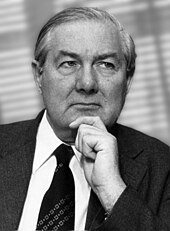
The longest-married prime government minister was James Callaghan who was married to his wife Audrey for 66 years from 28 July 1938 until her death on 15 March 2005.
Four prime number ministers married while in office, three to 2d wives:
- Sir Robert Walpole to Maria Skerrett before 3 March 1738; she died after a miscarriage on four June that year, after at least 93 days' union, making this the shortest marriage enjoyed by a prime government minister (although she previously cohabited as his mistress).
- The Duke of Grafton to Elizabeth Wrottesley on 24 June 1769; she survived him, dying in 1822.
- Lord Liverpool to Lady Mary Chester on 24 September 1822; she survived him.
- Boris Johnson married Carrie Symonds, his third wife, on 29 May 2021. He divorced both his first wife Allegra Mostyn-Owen and his second, Marina Wheeler.
Widowed [edit]
Widowed the longest [edit]
- The British prime minister widowed the longest is Lord Rosebery who died more 38 years after his wife.
- Recently, the British prime government minister widowed the longest is Harold Macmillan, who was widowed from 21 May 1966 to his death on 29 Dec 1986, a full of 21 years.
Widowed the shortest [edit]
The British prime minister widowed the shortest is James Callaghan, who died on 26 March 2005. His wife, Audrey Callaghan, died on xv March 2005, only 11 days earlier him.
Other widowed prime number ministers [edit]
- Sir Robert Walpole (twice widowed, when in office: 1737 and 1738)
- The Duke of Devonshire
- George Grenville
- Lord Shelburne (twice widowed)
- Henry Addington
- Lord Liverpool (widowed when in role: 1821; remarried)
- The Duke of Wellington
- Lord Melbourne
- Lord Russell (remarried)
- Lord Aberdeen (twice widowed)
- Benjamin Disraeli
- Lord Salisbury (when in part: 1899)
- Sir Henry Campbell-Bannerman (when in office: 1906)
- H. H. Asquith (remarried)
- David Lloyd George (remarried)
- Bonar Law
- Stanley Baldwin
- Ramsay MacDonald
- Clement Attlee
- Alec Douglas-Home
- Margaret Thatcher
Divorced [edit]
Only iii British prime ministers have been divorced:
- The Knuckles of Grafton divorced his commencement wife, Anne (née Liddell), by Human activity of Parliament passed 23 March 1769, during his term of part, then remarried on 24 June that year to Elizabeth Wrottesley. (Anne remarried on 26 March 1769 to John FitzPatrick, 2d Earl of Upper Ossory and died in 1804 in Grafton's lifetime.)
- Sir Anthony Eden, divorced his first wife Beatrice (née Beckett) in 1950 then remarried two years subsequently to Clarissa Spencer-Churchill on xiv August 1952, before his term of office began. (Beatrice never remarried and died in 1957 in Eden'due south lifetime.)
- Boris Johnson divorced his kickoff wife Allegra Mostyn-Owen in 1993 and remarried to Marina Wheeler 2 weeks later. In 2018, Johnson and Wheeler separated, finalising their divorce in November 2020.
Bachelors [edit]
Only four British prime ministers accept been bachelors:
- The 1st Earl of Wilmington
- William Pitt the Younger
- Arthur Balfour
- Edward Heath
Kindred prime ministers [edit]
At least 24 British prime ministers were related to at least one other prime minister by blood or marriage.
Fathers and sons [edit]
Two sets of father and son take successively held the office:
- Lord Chatham (aka "Pitt the Elderberry") and William Pitt the Younger
- George Grenville and William, Lord Grenville
Brothers [edit]
The only brothers to hold the function were Henry Pelham (PM 1743–54) and his older brother and immediate successor Thomas Pelham-Holles, 1st Knuckles of Newcastle (PM 1754–56, 1757–62); both were Whigs.
Full cousins [edit]
Pitt the Younger and Lord Grenville (who directly succeeded the latter in office) were the only prepare of full cousins to hold the office, their fathers being brothers-in-law.
Boris Johnson and David Cameron are also, albeit more afar, cousins, through their common ancestor George 2 of Great Uk
Uncles and nephews [edit]
There take been three blood uncle-nephew sets of prime ministers:
- Lord Chatham and Lord Grenville
- George Grenville and William Pitt the Younger
- Robert Gascoyne-Cecil, 3rd Marquess of Salisbury and Arthur Balfour, who succeeded Salisbury in function after the latter's last term. The phrase "Bob's your uncle" is said to accept originated in connectedness with this set, from ministerial promotions Balfour gained under Salisbury.[thirty] [31]
Great-peachy-uncle and great-great-nephew [edit]
Lord Wilmington was two-greats uncle of Spencer Perceval, whose mother, Catherine (née Compton), Baroness Arden, was a blood keen-niece of Wilmington.
Male parent-in-constabulary and son-in-police [edit]
The Knuckles of Portland, married in 1766 Lady Dorothy Cavendish, daughter of the Knuckles of Devonshire (who had died in 1764).
Brothers-in-law [edit]
- Pitt the Elderberry was married from 1754 to George Grenville'south sister Hester.
- Lord Palmerston was married from 1839 to Lord Melbourne'due south sister Emily, dowager Countess Cowper.
Uncle-in-constabulary and nephew-in-police force [edit]
Sir Winston Churchill and Sir Anthony Eden. In 1952, during Churchill'south second term, Eden married Clarissa, daughter of John Strange Spencer-Churchill, Winston's brother, before succeeding to the function.
Great-uncle-in-police force and great-nephew-in-law [edit]
Lord Grenville was married from 1792 to Anne Pitt, daughter of Thomas Pitt, 1st Baron Camelford who was a nephew of William Pitt the Elderberry.
Great-cracking-great-grandad and great-great-smashing-grandson [edit]
Alec Douglas-Home was the great-keen-swell-grandson of Lord Grayness.
Swell-neat-great-uncle and great-great-great-nephew [edit]
Lord Russell and Alec Douglas-Dwelling house.
Most children [edit]
The most prolific prime government minister was manifestly Lord Grey who in wedlock fathered ten sons and six daughters.[32] In addition to 1 illegitimate girl past Georgiana Cavendish, Duchess of Devonshire who was subsequently raised past Grey's parents.[33]
Height [edit]
The tallest prime number minister is believed to be Lord Salisbury, who was around half-dozen anxiety 4 inches (193.04 cm) in peak,[34] although Downing Street's own website lists half dozen-human foot-1-inch (185.42 cm) James Callaghan every bit the tallest.[35] The smallest prime government minister to accept office was believed to be Spencer Perceval who stood at effectually v feet 3 inches (160.02 cm) in summit[36] The next smallest prime number ministers were Margaret Thatcher, who was 5 feet 5 inches (165 cm).[37] and Lord John Russell who remained 'under' v feet 5 inches (165 cm) throughout his adult life.[38]
Richest [edit]
The richest prime government minister was Lord Derby, with a personal fortune of over £seven million (near £444 one thousand thousand in today'south money).[39] The poorest was William Pitt the Younger, who was £xl,000 (now over £one million) in debt by 1800.[xl] [41]
Run across likewise [edit]
References [edit]
- ^ "Sir Robert Walpole (Whig, 1721–1742) – History of government". Government of the Great britain. Retrieved 17 October 2018.
- ^ Family of David Cameron#Immediate family unit
- ^ Blake, Robert (xviii October 1984). "Weathering the tempest". London Review of Books. Vol. 6, no. 19. Retrieved 25 March 2020.
- ^ "Lord Liverpool was Not a Ninny". Shannon Selin. 10 January 2014.
- ^ Oxford Dictionary of National Biography, Volume 19. Oxford University Printing. 2004. p. 924. ISBN0-nineteen-861369-5.
- ^ a b Ruston, Alan. "Neville Chamberlain". Unitarian Universalist Historical Guild. Archived from the original on 21 February 2007. Retrieved 28 Jan 2022.
- ^ a b Crosby, Travis L. (2014). "The Instruction of a Statesman". The Unknown Lloyd George. London: I. B. Tauris. p. half dozen. ISBN978-1-78076-485-6.
- ^ a b Cregier, Don K. (1976). "Knickerbockers and Blood-red Stockings, 1863–1884". Bounder from Wales – Lloyd George's Career before the First World War. Columbia & London: University of Missouri Printing. p. 13. ISBN0-8262-0203-ix.
- ^ a b "James Callaghan". infobritain.co.uk. Archived from the original on 24 September 2015. Retrieved sixteen August 2015.
- ^ Hazel Shearing; Kathryn Snowdon (xxx May 2021). "Boris Johnson marries Carrie Symonds at Westminster Cathedral". Archived from the original on 9 July 2021. Retrieved 16 July 2021.
- ^ Kenneth O. Morgan, Callaghan: A Life, 1997, p.5 "His father's female parent was Elizabeth Bernstein, from Sheffield; he was, therefore, a quarter Jewish as well."
- ^ Fischer, Joseph (1912). Hartvig Philip Rée og hans slægt; udg. paa Foranledning af Eduard Rée. Copenhagen. pp. 47, 56, 59, 61, 62 & 64
- ^ The Legal Observer, or, Periodical of Jurisprudence, Volume 12 (1837?), p. 534
- ^ Peled, Daniella (2008). "Interview: Boris Johnson – my Jewish credentials". The Jewish Chronicle (April).
- ^ "Boris Johnson's Sister Reveals His Footling-known Past as a Volunteer on an Israeli Kibbutz". Haaretz. 8 Baronial 2016. Retrieved thirty June 2019.
- ^ "Clement Attlee | Humanist Heritage".
- ^ "Archived copy". Archived from the original on 30 March 2015. Retrieved 14 September 2015.
{{cite web}}: CS1 maint: archived re-create as title (link) Spartacus Educational website biography on Lord Liverpool. - ^ W. Attenborough, Churchill and the Black Domestic dog of Depression (2014), pp. 175–186.
- ^ [1] Spartacus Educational website biography on Harold Macmillan.
- ^ Gaby Hinsliff (x October 2009). "How Gordon Dark-brown's loss of an centre informs his view of the earth". The Observer. Archived from the original on 28 December 2013.
- ^ Clark, Ronald (2011). The Life of Bertrand Russell. Bloomsbury. ISBN978-one-4482-0215-7.
- ^ Baldwin: A Biography by Keith Middlemass and John Barnes (1969), folio 1070. Publisher, Weidenfeld and Nicolson.
- ^ Morris, Nigel (eleven November 2008). "Wilson 'may have had Alzheimer'south when he resigned'". The Independent. Archived from the original on 8 March 2018. Retrieved 28 August 2019.
- ^ Balfour resigned on 4 December 1905 just was succeeded the next day by his then Liberal opponent, Campbell-Bannerman, who did not hold the adjacent general election until January 1906. Balfour contested this as Leader of the Conservative Political party and lost.
- ^ Dermot Englefield (1995), Facts Nigh the British Prime Ministers, H.West. Wilson Co, ISBN 978-0-8242-0863-9
- ^ Medals in this context mean wearable awards, not including prize medals such as those accompanying the Nobel Prizes.
- ^ "Orders, Decorations and Medals". The International Churchill Lodge. 18 June 2008.
- ^ Before Churchill, the most busy was the Duke of Wellington, whose orders, decorations and medals totaled at to the lowest degree 28.
- ^ "History – The Year London Blew Up". Channel four. Retrieved 20 Apr 2010.
- ^ Trahair, R.C.S. (1994). From Aristotelian to Reaganomics: A Dictionary of Eponyms With Biographies in the Social Science. Greenwood Publishing Group. p. 72. ISBN978-0-313-27961-4 . Retrieved thirty July 2012.
- ^ Bernstein, Jonathan (2006). Knickers in a Twist: A Dictionary of British Slang. Canongate U.S. p. 65. ISBN978-1-55584-794-4 . Retrieved 4 Baronial 2012.
- ^ Payne, Edward John (1911). . In Chisholm, Hugh (ed.). Encyclopædia Britannica. Vol. 12 (11th ed.). Cambridge University Press. pp. 586–588, see page 588, third para, penultimate sentence.
Past his married woman Mary Elizabeth, but daughter of the offset Lord Ponsonby, whom he married on the 18th of November 1794, he became the father of ten sons and five daughters.
- ^ Bolen, Cheryl. "Georgiana, Duchess of Devonshire". Cheryl Bolen . Retrieved 28 April 2021.
- ^ Englefield, Dermot; Janet Seaton; Isobel White (1995). Facts About the British Prime Ministers. Mansell. p. 374.
- ^ "James Callaghan". 10 Downing Street. Archived from the original on 25 June 2007.
- ^ Englefield, Dermot; Janet Seaton; Isobel White (1995). Facts Well-nigh the British Prime Ministers. Mansell. p. 374.
- ^ "Statesmen and stature: how tall are our world leaders?". The Guardian. eighteen Oct 2011. Retrieved 7 January 2022.
- ^ Prest, John (21 May 2009). "Russell, John, first Earl Russell (1792–1878)". Oxford Dictionary of National Biography (online ed.). Oxford University Press. doi:10.1093/ref:odnb/24325. (Subscription or Great britain public library membership required.)
- ^ "Richest British Prime Minister". guinnessworldrecords.com. Retrieved 12 Apr 2013.
- ^ "PITT, Hon. William (1759–1806), of Holwood and Walmer Castle, Kent". The History of Parliament . Retrieved 1 July 2016.
- ^ "William Pitt the Younger". Regency History . Retrieved 1 July 2016.
Source: https://en.wikipedia.org/wiki/Records_of_prime_ministers_of_the_United_Kingdom
Posted by: harrisvour1938.blogspot.com
0 Response to "The Comeback Kids! From Churchill to Gladstone, the prime ministers who returned to lead Britain for a second time"
Post a Comment